The Load Line Method
Getting the most out of agent assistance while holding quality and control in knowledge work.
Mathew Hager · mathewhager.com · Version 1.10 · October 2026
The short version
More and more often, we hand the execution of work to agents. That puts the planning, the review and the judgment on us.
That shift changes how you manage work, and how you manage time. It does not change what you are answerable for.
You did not write it. You still own it.
The Load Line Method is a framework for working inside that shift.
The name comes from ships. A load line is a mark painted on a ship's hull, and it shows how deep she may be loaded.
The Method's job is to tell you how much you can carry and still be any good at it, how to know when you are near the line, what to do when you reach it, and what you will accept when the work comes back.
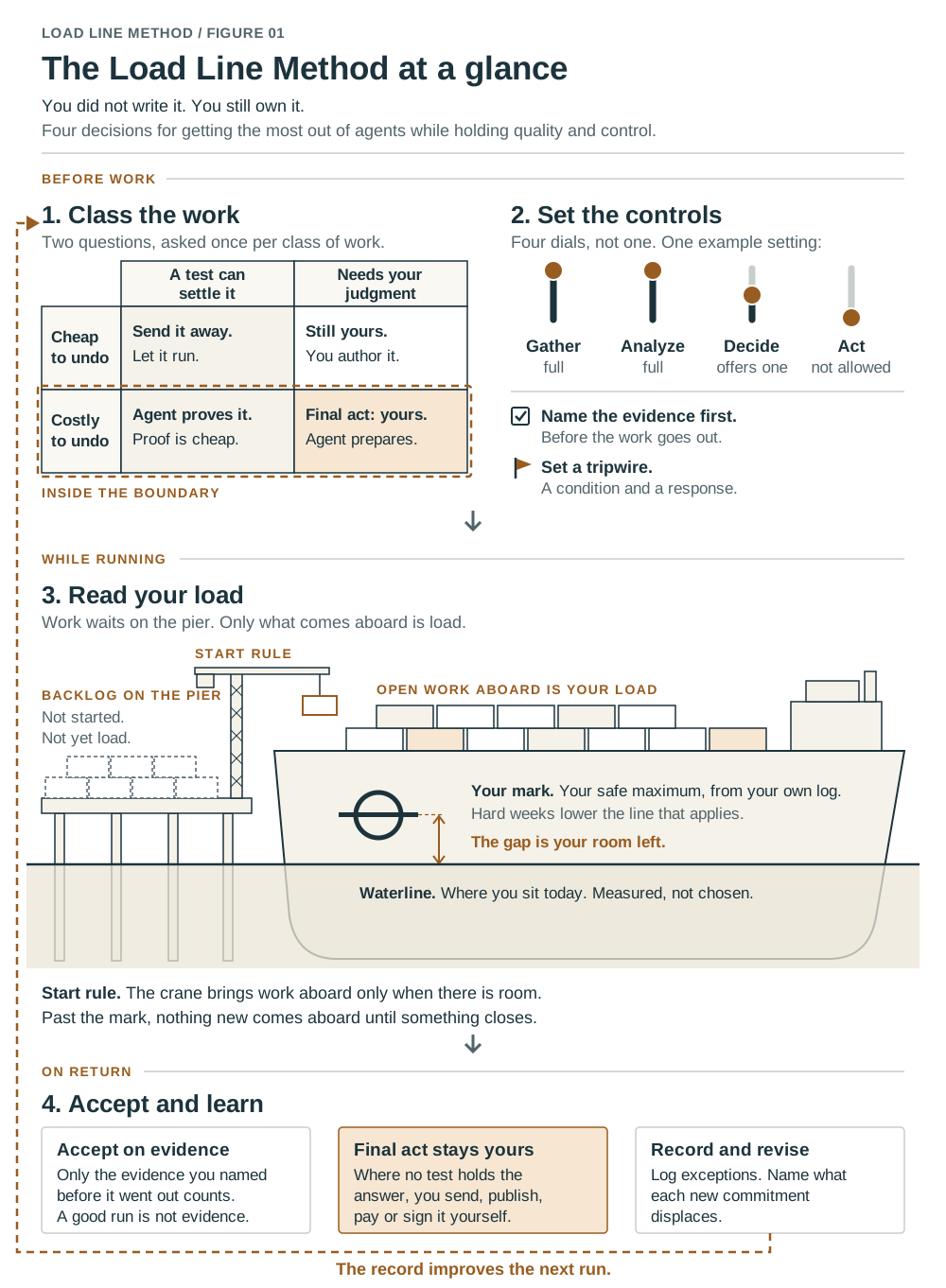
Figure 1: the Method at a glance. Class the work and set the controls before it starts. Work waits on the pier until the start rule brings it aboard, and only what is aboard counts as load. Then accept on evidence and learn from what returns.
Six ideas in the paper
Anyone using AI is a manager now
The expectation now is that everyone delegates work to agents, or soon will. So anyone using AI is a manager now, whether or not they have direct reports.
Send away what a test can settle
Review runs on a spectrum, and what it costs to be wrong decides where on it you sit. Where a test can settle the answer, send it to an agent and let it run, because your reading of it adds nothing.
Two decisions, made at different times
- Before the work: risk sets how much authority it gets.
- After the work: you accept on evidence you named before it went out, and on nothing else.
Four stages, each with its own authority
- Gathering
- Analyzing
- Deciding
- Acting
Each can be given a different amount of authority. So an agent can gather with full authority and still not be allowed to act.
Controls before the work
Checking after the fact cannot catch everything. That is provable rather than pessimistic. Protection comes from the controls you set before the work starts.
Your own mark
Your own mark works like the ship's. The limit in this version is borrowed from published work rather than measured here. The mark itself has to be measured.
What you can do this week
- Sort the work a test can settle from the work only you can judge.
- Set how much authority the agent gets before it starts.
- Decide in advance what evidence you will accept when the work comes back.
- Measure what you can actually carry.
Every one of them is a decision you make, not a feature you install. Doing them right still takes building, and it cannot be a paper exercise.
Inside the paper
- 1. Where the work now lands. What you own, what you can take in, what review costs and what never reaches you.
- 2. How to carry more of it. What you can send away, two decisions and when you make each, and finding your unit.
- 3. Where the mark goes. Two marks and the gap between them, where the instrument sits, and the sentence that logs a trade.
- 4. Conclusion. How much you can load and still be effective, how you would know, and why the upkeep belongs with an agent.
The appendix runs four pieces of work end to end:
- A pricing table for a client proposal
- Reconciling two ledgers at month end
- A literature summary for a strategy paper
- A recurring internal status note
About the author
I served as a nuclear trained and qualified submarine officer, and I hold an MBA. On board I was Assistant Operations Officer, overseeing the teams for communications, navigation, IT and electrical distribution, and for three years the cybersecurity manager.
A lot of this paper comes from how we handled safety on board. Since leaving I have run the AI adoption problem twice, in a public company's regulated healthcare business and in a seed-stage startup.